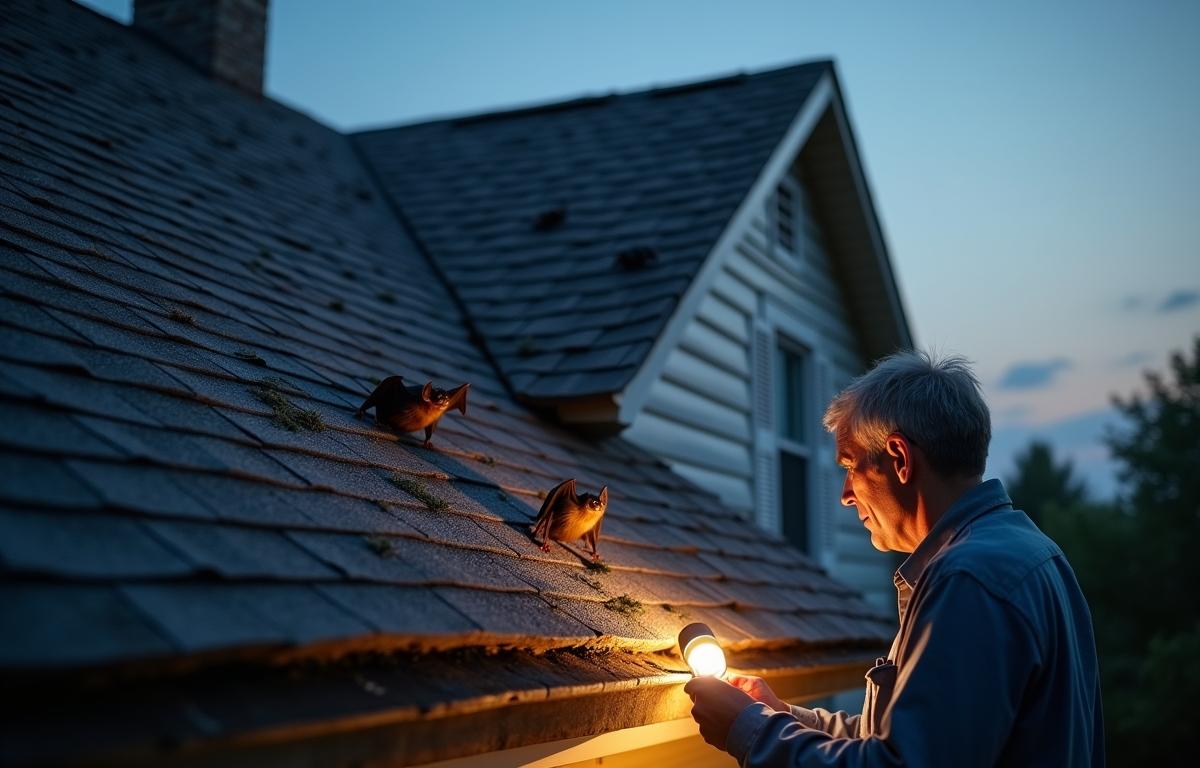
Odd-hour squeaking in your home can signal the need to know how to get rid of bats in roof using reliable methods. These winged mammals often slip into tiny gaps and cracks that homeowners don’t notice until a bat infestation starts gaining momentum. Once they settle in, they can create considerable mess, which includes bat guano and foul odors that linger if not properly addressed.
Many people assume bats are harmful, yet they do offer benefits to the environment by consuming large quantities of insects. However, you still want to remove bats safely before they cause structural damage or health risks. Specialized techniques such as bat exclusion and bat control will help you tackle the problem without harming these creatures or breaking local wildlife control regulations.
Why Bats Occupy Roof Spaces
Bats choose roof spaces because they typically look for dark, warm, and protected areas. The small gaps found in loose shingles or attic vents provide perfect bat entry points, similar to roof rats in attic. Over time, a single bat can attract more companions, and you end up with growing bat colonies that prefer to remain hidden until nightfall.
Another factor is bat behavior related to roosting and breeding. They often gravitate toward areas with stable temperatures and minimal disturbances. Once they claim a spot, removing them becomes more complicated if you don’t plan bat removal before mating seasons ramp up.
Planning Bat Control Tactics
Successful bat control usually includes understanding local laws regarding humane bat removal. Some regions classify bats as endangered bats, so you might face legal restrictions on how to eliminate bats during specific seasons. Planning things out ensures you’re prepared with the right bat deterrents and the correct timeline for safe bat removal.
When drawing up a strategy, think about potential bat damage repair too. Bats may leave behind droppings, and you’ll need to handle bat guano cleanup with proper protective gear. This approach not only keeps your family safe but also prevents secondary problems such as mold or foul smells.
Humane Bat Removal and Bat Exclusion Methods
Many homeowners wonder how to eliminate bats without harming them. Humane bat removal depends on methods like using one-way exit devices and letting the bats leave on their own. By installing small funnels or netting at important bat entry points, you exclude bats from re-entering once they fly outdoors in the evening.
Bat exclusion is a key technique because it focuses on encouraging bats to move on naturally. Trapping or poisoning is ill-advised and often illegal, especially with so many endangered bats on protected species lists. Hiring professional bat removal ensures the job is handled safely and humanely. A humane approach also helps maintain the ecosystem benefits that bats bring, such as insect control around your property.
Timing Your Removal Efforts
You’ll see the best results if you exclude bats after their young have matured enough to fly. Otherwise, you risk separating young bats from their mothers, leading to even more complications. Remember to check state and local guidelines on bat removal schedules so you remain compliant with wildlife control policies.
Seal Entry Points and Bat-Proofing Your Home
After you exclude bats successfully, the next big step is ensuring they can’t find their way back. Begin by sealing off cracks, crevices, and any openings in roofing materials. This process of bat-proofing involves thorough checks of your attic, chimney, vents, and other hidden corners.
Look for loose shingles, holes around utility lines, and damaged flashing. Use weather-resistant sealants or mesh screens where necessary. Installing a proper bat deterrent also helps. Approaches like placing bright lights or sonic devices in your attic could keep them away, although results vary from one property to another.
Effective Bat Infestation Solutions for Attic and Chimney
Your attic and chimney are favorite hangouts for bats once they figure out how to get inside. To get rid of bats in attic areas, inspect the entire space for droppings and any visible signs of nesting. Removing smaller bits of insulation may help you locate any cracks the bats are using. If you identify such flaws, fix them before the bats return at night.
Bats in chimney spaces require special handling to prevent them from flying into your living area. Installing a well-fitted chimney cap is often enough to keep them out. If they’re already inside, you can set up a one-way exclusion device and then block their access point with durable screening. This step ensures you remove bats safely without trapping them.
Checking for Hidden Gaps
Sometimes, entry points aren’t easy to spot when you do a quick tour. Use a flashlight to trace spots where daylight might peek through or where you feel a draft. These tiny gaps are prime bat entry points and require immediate sealing to complete your bat proofing efforts.
Cleaning Bat Droppings and Maintaining Safety
Once you evict bats, you’ll likely need to perform a thorough cleaning of their droppings. Bat guano can carry pathogens and create unpleasant odors that linger in enclosed spaces. Wear a suitable mask and gloves to protect yourself while cleaning bat droppings. Seal everything in secure bags and dispose of waste material following local guidelines.
If you’re dealing with large accumulations of guano, consider hiring professional bat services to handle the bat guano cleanup. Trained experts have specialized equipment to sanitize the area thoroughly. This step prevents health hazards and helps keep the environment cleaner and healthier for your household.
Utilizing Natural Bat Removal Techniques
For homeowners seeking eco-friendly bat control, there are natural bat removal methods you can consider. Creating alternative roosting options like bat houses away from your roof may encourage them to move elsewhere. Many people use insect-attracting plants or water sources near these alternative roosts to entice bats to a different location.
At the same time, reduce the reasons bats might choose your roof in the first place. Trim back tree branches that could act as climbing aids for predators or provide easy bat access. Keeping your yard well-lit at night (without overdoing it) can serve as a mild bat deterrent, although not all species respond the same way.
Collaborating with Neighbors
Bats don’t always stay confined to a single roof. They might roam across multiple houses that have suitable spaces. Neighbors should coordinate efforts for more consistent bat prevention. When everyone seals gaps, uses bat repellents responsibly, and keeps an eye on potential re-infestations, your neighborhood will become far less appealing to bat colonies.
Professional Bat Services and When to Call
DIY strategies work well for smaller colonies, but larger infestations can get out of control quickly. In such cases, professional bat removal can save you time, reduce stress, and ensure safe bat removal. Experts often use specialized tools like ultrasonic devices, netting, or funnels to exclude bats without exposing you to pests or potential diseases.
Always verify that your chosen service uses humane bat removal strategies and follows local regulations about endangered bats. You can also look for bat removal services that offer bat damage repair to fix any structural issues caused by the infestation. This comprehensive approach ensures you don’t have to hire multiple contractors.
Benefits of Expert Assistance
Professionals often have deeper knowledge of bat behavior and the best times of year to carry out exclusions. They can spot hidden areas you might miss, such as narrow openings under eaves or uncovered vents. By letting an expert handle the task, you minimize risks and increase the odds of a permanent solution.
Common Mistakes to Avoid
Some homeowners try quick fixes without proper planning, which can worsen the situation. For instance, using poison or blockading bats inside the attic can lead to unpleasant odors and complicated legal consequences. Overlooking small holes in your roof is another pitfall. Bats are adept at finding narrow passages, so missing even a single gap can defeat your exclusion attempts.
Another mistake is ignoring local wildlife control rules. Certain regions prohibit bat removal during maternity roosting phases. Violating these rules can result in hefty fines or legal disputes. Always check local guidelines and, if necessary, consult a professional bat removal expert.
Long-Term Bat Prevention
After you’ve managed to evict bats, focus on long-term strategies. Keep an eye out for any new holes or damage that might reappear on your roof. Regular seasonal inspections help you address issues before bat colonies return.
Implementing bat deterrents is also beneficial. Consider installing new lighting near entry points to discourage roosting, and maintain your yard in a way that doesn’t invite bats. Staying proactive goes a long way toward stopping future bat infestation problems and safeguarding the health of your home.
How to Get Rid of Bats in Roof FAQ
What Is the Fastest Way to Get Rid of Bats?
The fastest way to get bats out of a structure is to use professional exclusion, which involves installing one-way exit devices that let bats leave but not re-enter. This method is humane, legal in most areas, and highly effective when done correctly. Many homeowners searching for how to get rid of bats in your roof find that professional exclusion is the quickest and most reliable solution.
How Do You Encourage Bats to Leave?
You can encourage bats to leave by making the space less comfortable for them, such as increasing light, airflow, and noise in the affected area. Installing one-way bat valves allows them to exit safely during their normal feeding times without returning. Some homeowners also explore how to get rid of bats in roof naturally by using deterrents like bright lights, strong scents, and consistent disturbance.
What Do Bats Hate the Most?
Bats are highly sensitive to light, noise, and strong odors, which disrupt their ability to roost comfortably. They tend to avoid areas with bright lighting, constant vibration, or strong smells such as mothballs or certain essential oils. Making an attic consistently uncomfortable is often what drives them to relocate.
Is It Bad to Have Bats in Your Roof?
Yes, having bats in your roof can lead to serious health and structural issues over time. Bat droppings, known as guano, can harbor harmful fungi that cause respiratory illnesses in humans. Additionally, accumulated guano and urine can damage insulation, wood, and drywall.
What Do I Do If I Find Bats in My Roof?
If you discover bats in your roof, the first step is to avoid direct contact and seal off any interior access points to living spaces. You should contact a licensed wildlife removal professional who understands local bat protection laws. Attempting removal on your own can be dangerous and, in some cases, illegal.
Do Bats Return to the Same Place Every Night?
Yes, bats are creatures of habit and will usually return to the same roost night after night as long as it remains safe and accessible. They rely on familiar shelter for protection from predators and weather. This is why proper exclusion requires sealing every possible re-entry point after they leave.
Will Leaving a Light on in the Attic Get Rid of Bats?
Leaving a light on can make the attic less appealing, but it is rarely enough on its own to eliminate a bat infestation. Bats may temporarily avoid the area but often adapt or move deeper into darker sections of the structure. Light works best as a supplement to a structured exclusion plan.
How Much Does It Cost to Have Bats Removed From an Attic?
The cost of professional bat removal typically ranges from a few hundred to several thousand dollars, depending on the size of the infestation and the complexity of the home. Factors such as roof height, number of entry points, and cleanup requirements all influence the final price. While it may seem expensive, proper removal prevents costly long-term damage and health risks.