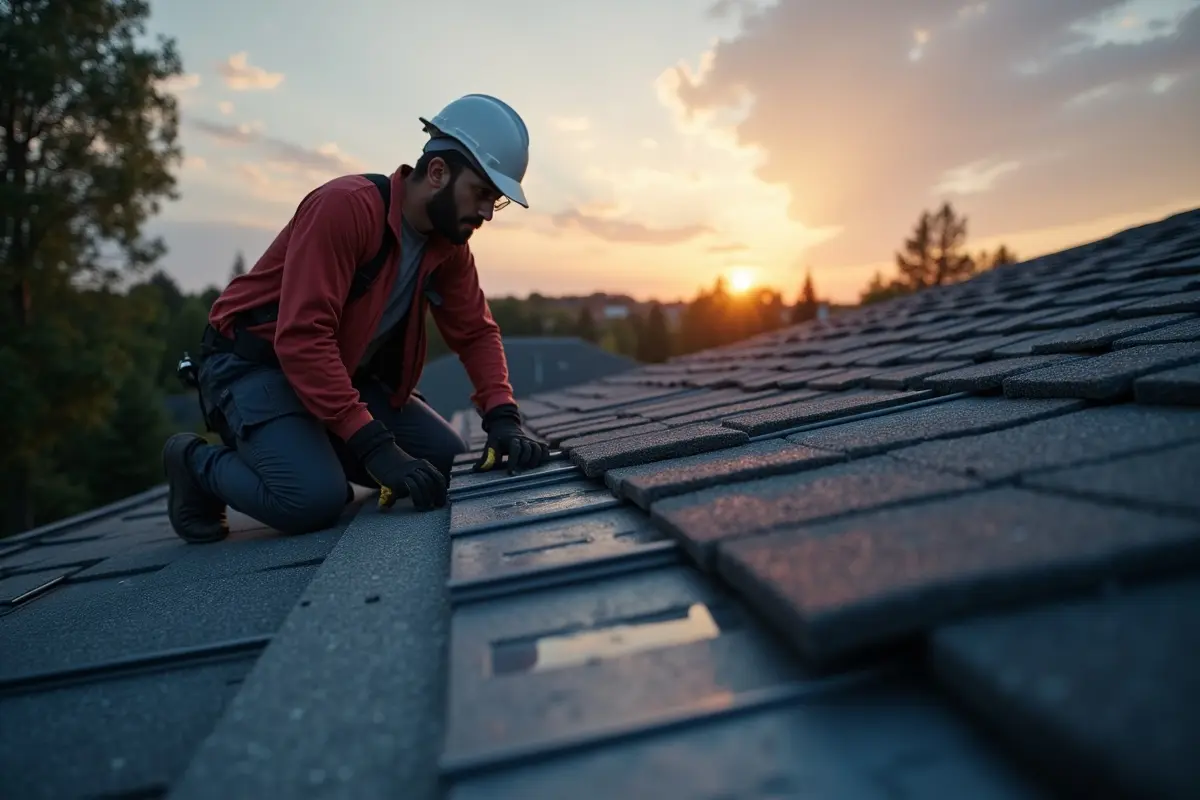
A roofing project affects more than the surface above your head. There is the noise around the property, the waste leaving the site, the time workers need to complete the job, and the inconvenience that comes with having part of your home or business under construction. A thoughtful roofing strategy considers these realities from the beginning. The goal is durable protection, but also a project that makes sensible use of money, materials, time, and existing resources.
Metal-Over-Shingles Reroofing
The Metal-Over-Shingles Reroofing (Overlay) technique is not just a standard repair alternative; it is an innovative method that leverages the results of your previous work with shingles and the actual condition of your roof to overlay with a metal roof to provide you with compounded benefits. Through a professional inspection, the deterioration of the asphalt shingles is accepted as a normal part of the home’s aging process.
That’s where a professional metal roof over shingles installation becomes a practical, resource-conscious solution for extending roof protection without the disruption of a complete tear-off. However, the existing shingles are first restored to top quality before the overlay process begins. Once the process confirms that the structure is safe, decisions are made to install spacing wood (furring strips) and ventilation systems for a sound combo-roofing system.
For a homeowner who needs a more durable roof but does not want a prolonged tear-off operation, that difference is significant.
- Double thermal barrier
- Less material to remove and dispose of
- Reduced disruption during reroofing
- A potentially faster installation
- Reuse of a suitable existing roofing layer
- You get the durability of Class 4 Impact Resistance and the ability of the metal roof to withstand high winds
This should be viewed as an engineered roof-over system rather than a simple labor-saving shortcut.
However, the shingles, decking, ventilation, moisture condition, structural capacity, and applicable building requirements all deserve a proper inspection first.
Cool Roof Coating Systems
Cool Roof Coating Systems are another innovative and sustainable method that accepts the existing roof and its wear and tear, then transforms it into a robust system with compounded benefits without the need for demolition.
It involves a professional soft wash, repair of minor cracks, and then applying or spraying a thick liquid layer of silicone or Acrylic coating. Once this layer dries, it forms a single, continuous, seamless rubberized membrane over the entire roof. That seals all cracks, nail holes, and loose flashing joints. It stops seepage and leaks immediately
Where the roof is a good candidate, the coating can:
- Protect against weather and UV exposure
- Help reduce solar heat absorption
- Create a continuous protective surface
- Extend the service life of a suitable roof
That is the real advantage of specialized roofing work: knowing when a less invasive solution is appropriate—and when it is simply covering up a problem.
This approach deserves more planning than simply deciding what color to use. The technology is impressive, but installation expertise remains decisive. A sophisticated roofing product poorly matched to the building is still a poor roofing solution.
Ridge Ventilation and Radiant Barriers: Where you Don’t Usually See
Some roofing problems are easy to spot because they are right in front of you. Others are happening above your ceiling while the roof looks perfectly normal from the street. However, some of the most valuable upgrades on a roof hidden in the structures.
For example, if your home fails to comply in the summer or builds up condensation in the winter, the problem usually isn’t the shingles, probably it’s what’s happening in the attic. The attic’s airflow and thermal conditions deserve attention.
Ridge ventilation, properly sized soffit intake, and radiant barriers can work together to improve that hidden environment. Warm air has a route to escape through the ridge while fresh air enters through the soffits. A radiant barrier can also reduce radiant heat transfer into the attic.
The mistake is treating ventilation as a matter of simply installing a vent. For professional roofers, it is a balancing exercise. It involves checking whether the intake and exhaust paths actually work together while considering insulation, moisture, roof geometry, and existing ventilation before changing anything. That level of inspection is what turns a roofing repair into a comprehensive solution.
In essence, modern roofing gives property owners more choices, but more choices also make professional judgment more important. The right approach may involve preserving an existing layer, extending a serviceable roof, integrating energy technology, or improving what happens underneath the shingles. Sustainable progress starts with understanding the property first, then selecting the solution that genuinely fits it.